Home › Blog › Stop depending on ad revenue
What are the top 3 ways creators stop depending on ad revenue?
Three ways, and they work best in this order. First, build a list of your own, by offering your viewers something worth giving their name and number for. Second, make an offer of your own, a course, a product or a service, built around the question your viewers ask most. Third, add income that comes every month, such as a paid community or membership.
Ad revenue is not wrong. It just goes up and down with things you do not control. These three are yours, and in my experience a good offer of your own can earn many times what ads and brand deals pay.
A creator checks her earnings at the end of the month. Same number of videos as last month. Same kind of views. The ad money is lower, and nobody can tell her why. Maybe it is the season. Maybe it is the subject. Maybe the platform changed something.
She cannot fix it, because she does not control it. That feeling is the reason to build the three things below.
Why is ad revenue not enough on its own?
Because every part of it is decided by someone else. The platform decides which videos can carry ads, how much advertisers pay that month, and who sees your videos at all. You can do everything right and still earn less.
There is a second problem. To keep ad money steady, you have to keep making more videos. The platforms want viewers who never leave and creators who never stop. I have watched many creators burn out playing that game. You do not have to play it if your videos lead somewhere you own.
Way 1. Build a list of your own
This comes first because the other two depend on it. YouTube, Instagram and Facebook will never give you your viewers' names or numbers. You can have lakhs of subscribers and still not be able to reach one of them unless the platform decides to show your next video.
The fix is to offer something worth giving a name and number for:
- a free guide or checklist that answers the question your viewers ask most
- a short free class or workshop
- a shortlist, a template or a plan they can use the same day
Put it in the description, the pinned comment and your bio, and mention it in your videos. Abhay Rikhi, a real estate adviser in Gurgaon whose YouTube channel crossed 10,000 subscribers, offers a free shortlist of projects he has checked. The people who download it become names he can call, instead of views he cannot reach.
Once someone is on your list, you can follow up personally, sort people by what they need, and talk to them more than once, in private. I go deeper into this in how to build your own list from YouTube.
Way 2. Make an offer of your own
This is the one most creators never do. They will happily put a brand's offer in the middle of a video for money. Nobody stops them from putting their own offer in the same place. Most simply never do.
Your offer is usually hiding in your comments and messages. Read them for the question people ask again and again. Then:
- If they ask how you did it: teach it, in a course or a workshop.
- If they ask you to do it for them: offer it as a service.
- If they ask what you use: make or sell the product.
Then build the path to it. A video that names the problem, a page with one next step, and a follow up for the people who showed interest. Out of a hundred viewers, only about three are ready to buy this week. The rest need more videos and more time with you first. I explain that path in how to sell a course on Instagram and YouTube.
Dr Madhusudan, an Ayurvedic doctor we work with, is a good example of where this leads. His videos reached 19.5 lakh views in five months, and people now buy on his own pages without calling the clinic first. Every step is on his case study page.
If you are weighing this against brand deals, I compare the two side by side in brand deals vs your own offer.
Way 3. Add income that comes every month
A course sells once. A paid community or membership earns every month, from people who want to stay close to you: live sessions, answers to their questions, and a group of people like them.
It also serves the people who are not ready for your big offer yet. Many of them would gladly pay a small amount every month to keep learning from you. Dr Arjun Sabharwal, a kidney doctor with 1.26 lakh subscribers on YouTube, opened a paid members' room in March 2026. It had 247 members on 4 September 2026. His case study is here, and I wrote about how this works in how experts build income every month.
These results are theirs. Yours will depend on your subject, your viewers and how long you keep going, and nobody honest will promise you a number.
Do I need a big channel for any of this?
No. What you need is the right people watching and a way for them to reach you. Shubhi Mittal had 84 followers when her second reel with us was watched 3.44 lakh times. Reach came from a video made for people who did not know her yet, not from her following. A small channel with a list and an offer is in a stronger place than a big channel with neither.
Why do I care so much about this?
Because I learned it on my own channel. Peepoye has 1.28M subscribers. Before Peepoye, I spent years in data, analytics and business transformation, and I studied advanced analytics at IIM Ahmedabad. When I started reading my own channel the way I used to read data for big companies, the pattern was clear: views are the start, not the result. The result is what the people watching do next.
The full picture of how creators earn is in how content creators make money beyond ad revenue. And if you want the channel to grow first, start with a good YouTube growth strategy for 2026.
Questions people ask about this
How can a YouTuber earn without relying on AdSense?
Build a list of your own by offering something free and useful, make an offer of your own such as a course, product or service, and add income that comes every month such as a paid community. Ads can stay, but they should not be the only thing paying you.
What should my first offer be?
The answer to the question your viewers ask most. Read your comments and messages. If people ask how you did something, teach it. If they ask you to do it for them, offer a service. If they ask what you use, sell the product.
What free thing should I give to build my list?
Something your viewer can use the same day: a checklist, a short guide, a template, a shortlist or a short free class. It should be useful even to people who never buy anything from you.
Is a paid community better than a course?
They do different jobs. A course sells once to people ready for a full programme. A paid community earns every month and suits people who want to keep learning from you but are not ready for the bigger offer yet. Many creators have both.
Should I stop doing brand deals?
No. Brand deals are fine. The risk is depending on them alone, because the brand decides whether to come back. Keep them, and build income you own alongside them.
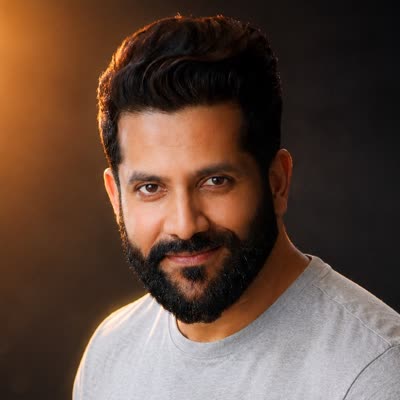
Akash Gupta
Founder of PhantasyLabs, part of Peepoye Network. Advanced analytics from IIM Ahmedabad, Lean Six Sigma Black Belt from Motorola University, and years in data and business transformation for global companies. He built a YouTube channel to 12.8 lakh subscribers before building the system that now runs it, and PhantasyLabs produces and publishes video for doctors, coaches, experts and brands. More about us.