Home › Blog
Video marketing for a clinic in India: the whole picture
Video brings a clinic patients when four things are right at the same time: the content speaks to people who are not yet looking for a doctor, the words stay inside what Indian law allows a doctor to say, whoever makes the videos understands medicine as well as editing, and there is somewhere for a viewer to go at eleven at night that is not a phone call.
Most clinics get one of the four right and conclude that video does not work.
This is the guide we wish existed when we started running video for doctors. Each part below is short here and has its own full article as we write it.
1. Your videos are almost certainly made for the wrong people
Out of a hundred people who could one day become your patients, roughly three are looking for a doctor today. Around seventeen have decided to do something and are still comparing. Twenty know something is wrong but have never been told it has a name. And about sixty do not know anything is wrong at all.
Nearly every clinic account in India makes content only for the first three. Treatments, timings, offers, the clinic tour, the doctor's qualifications. Useful, and invisible to ninety seven people out of a hundred.
The change that matters is made before the camera is switched on. You decide which of those groups each video is for, and you build your regular subjects around the groups rather than around your price list. The full article on this is here, including a ten minute test you can run on your own last ten videos.
2. What a doctor is allowed to say in India is narrower than most agencies know
A doctor in India is not an ordinary advertiser. Two separate bodies of rule apply at once. The Drugs and Magic Remedies (Objectionable Advertisements) Act, 1954 forbids advertising that claims to treat or cure a long list of named conditions. The medical council’s own ethics regulations restrict a doctor from soliciting patients or using his own name as advertising. Clinics in Ayurveda, Siddha and Unani carry a further set on top of those.
None of this stops a doctor from teaching in public, and the difference between teaching and advertising usually comes down to the verbs. The full article on what each of those rules actually says is here, including the seven things a doctor is expressly allowed to announce and the seven checks we run before medical content goes out.
3. Editing is a craft. Knowing what to say is a different job.
Most video agencies are production houses. They shoot well, they cut well, and they will make your clinic look good. What they are usually not asked for, do not price, and do not do, is the decision about which subject, for which group of people, in which format, and in what order over a year.
So the doctor pays for production, receives good looking videos that all speak to the same three people, sees nothing happen, and concludes that video does not work for medicine. The production was never the missing piece.
4. Time is the real ceiling, and it is why most clinic content stops
A practising doctor's content usually dies in month two, and not because it failed. It dies because the only person who can make it is also the only person seeing patients. Every hour given to filming is an hour not spent in the chair, and the clinic's income stops the day the doctor stops.
That is the actual problem underneath most of these conversations, and it is worth naming plainly instead of treating it as a discipline failure.
5. A phone number only ever catches the people who are ready to speak
Suppose the videos work. A man at eleven at night finally understands that what he has lived with for two years has a name. On most clinic accounts the only thing he can do next is call a clinic tomorrow and say it out loud to a receptionist.
Most people will not. So they watch, they feel something, and nothing about them is ever recorded. A page a person can read on his own, at his own pace, catches the ones a phone number never will. For one Ayurvedic clinic we run this for, 437 people arrived on those pages between 11 August and 1 September 2026 and 219 of them paid, from his own live records, and nobody phoned any of them first. Every step of it is laid out here.
6. How you know whether any of it is working
Views and followers are not the measure. The measures that matter to a clinic are how many people arrived on the page after watching, how many left their name, how many paid, and how many came back. If nobody can tell you those four numbers, nobody is running your video properly, whatever the reach looks like.
Everything we have written so far
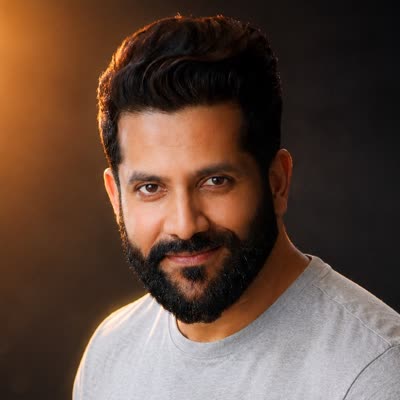
Akash Gupta
Founder of PhantasyLabs, part of Peepoye Network. He built a YouTube channel to 12.8 lakh subscribers before building the system that now runs it, and PhantasyLabs produces and publishes video for doctors, coaches, experts and brands. More about us.
These articles are about content and publishing, not about treatment. Nothing here is medical advice, and nothing here claims that any treatment cures, prevents or guarantees a result. Anyone with a health concern should speak to a qualified practitioner.